

Never preach harder than you entertain.
I got the quote above from Jim Butcher,1 author of the very successful Dresden Files series. It’s succinct and, I think, a great mantra for new and aspiring authors.
It’s not that an author can’t write stories with a message. However, if you put THE MESSAGE at the center of the story and force the characters and the plot to slavishly orbit your sermon-in-disguise, the result will not be the kind of story that people who like to read will want to read.2 Examples of this phenomenon abound, so I won’t bother to catalog them here.
If one were looking for examples of how to convey a message effectively, without sacrificing a good story, perhaps few would point to the works of Charles Dickens. After all, one might ask, isn’t Dickens well-known for how his books put a spotlight on the social issues of his day? Oliver Twist was all about how bad the Poor Laws were in Great Britain, wasn’t it? And Hard Times was definitely a “passionate revolt against the whole industrial order of the modern world”3 you must admit?
In a word: no.
At least not in the way that most people mean those things.
Dickens certainly had his agenda and he was open and honest about it. Nevertheless, he went about promoting that agenda in a way that adheres to the admonition not to preach harder than you entertain. He understood that grabbing the reader by the scruff of the neck to berate him with a lecture can never be as effective as letting the lesson grow out of the scene, the characters, and the (often ironic) consequences of actions.
Allow me to show you what I mean with an example from Bleak House.4
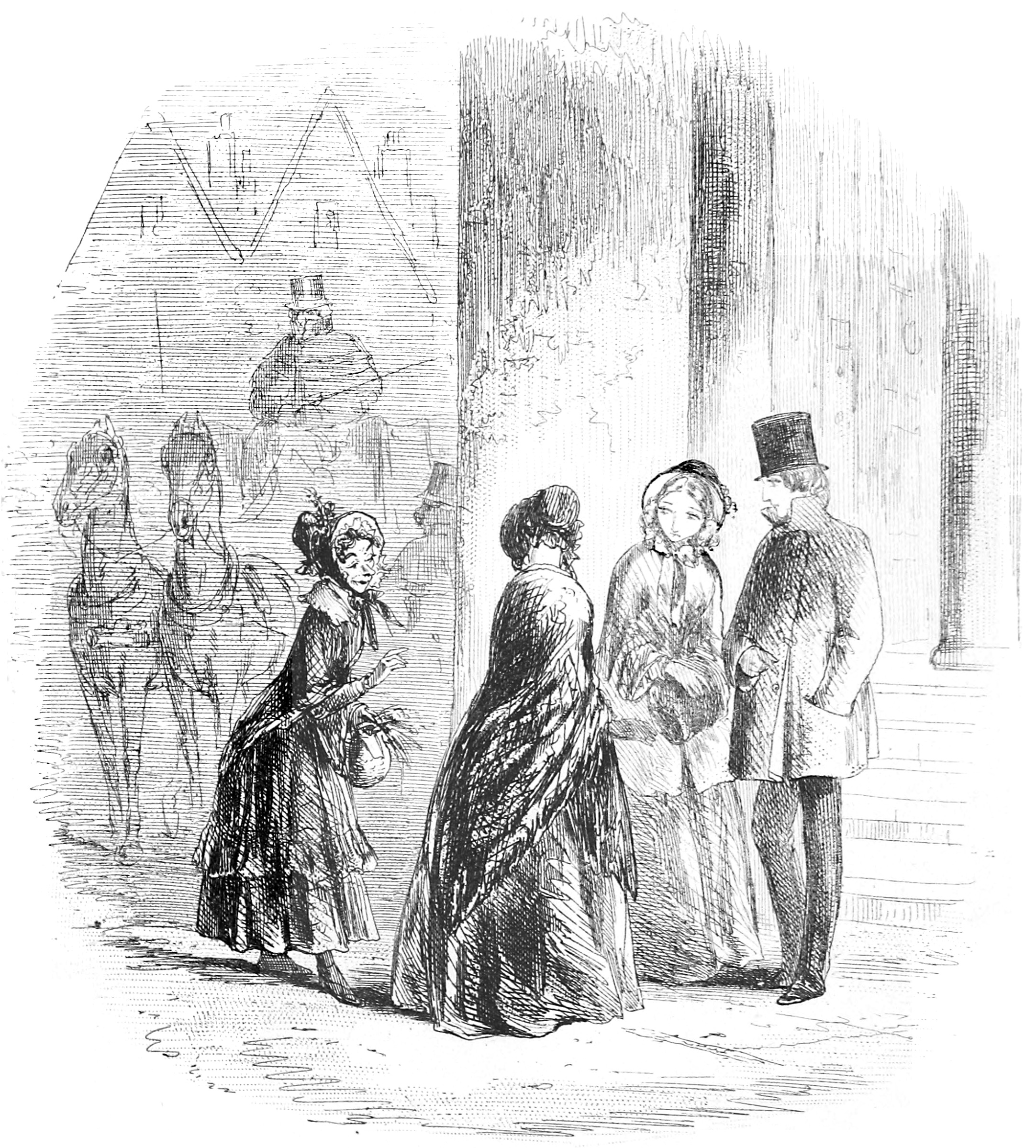
The plot of the book revolves around a disputed will that has been mired in the Court of Chancery for years. Early on, some of the main characters encounter Mrs. Jellyby at her home. The excerpt is substantial, but something shorter would diminish the effect Dickens intends.
“In-deed! Mrs. Jellyby,” said Mr. Kenge, standing with his back to the fire and casting his eyes over the dusty hearth-rug as if it were Mrs. Jellyby’s biography, “is a lady of very remarkable strength of character who devotes herself entirely to the public. She has devoted herself to an extensive variety of public subjects at various times and is at present (until something else attracts her) devoted to the subject of Africa, with a view to the general cultivation of the coffee berry—AND the natives—and the happy settlement, on the banks of the African rivers, of our superabundant home population. Mr. Jarndyce, who is desirous to aid any work that is considered likely to be a good work and who is much sought after by philanthropists, has, I believe, a very high opinion of Mrs. Jellyby.”
. . .
There was a confused little crowd of people, principally children, gathered about the house at which we stopped, which had a tarnished brass plate on the door with the inscription JELLYBY.
“Don’t be frightened!” said Mr. Guppy, looking in at the coach-window. “One of the young Jellybys been and got his head through the area railings!”
“Oh, poor child,” said I; “let me out, if you please!”
“Pray be careful of yourself, miss. The young Jellybys are always up to something,” said Mr. Guppy.
I made my way to the poor child, who was one of the dirtiest little unfortunates I ever saw, and found him very hot and frightened and crying loudly, fixed by the neck between two iron railings, while a milkman and a beadle, with the kindest intentions possible, were endeavouring to drag him back by the legs, under a general impression that his skull was compressible by those means. As I found (after pacifying him) that he was a little boy with a naturally large head, I thought that perhaps where his head could go, his body could follow, and mentioned that the best mode of extrication might be to push him forward. This was so favourably received by the milkman and beadle that he would immediately have been pushed into the area if I had not held his pinafore while Richard and Mr. Guppy ran down through the kitchen to catch him when he should be released. At last he was happily got down without any accident, and then he began to beat Mr. Guppy with a hoop-stick in quite a frantic manner.
Nobody had appeared belonging to the house except a person in pattens, who had been poking at the child from below with a broom; I don’t know with what object, and I don’t think she did. I therefore supposed that Mrs. Jellyby was not at home, and was quite surprised when the person appeared in the passage without the pattens, and going up to the back room on the first floor before Ada and me, announced us as, “Them two young ladies, Missis Jellyby!” We passed several more children on the way up, whom it was difficult to avoid treading on in the dark; and as we came into Mrs. Jellyby’s presence, one of the poor little things fell downstairs—down a whole flight (as it sounded to me), with a great noise.
Mrs. Jellyby, whose face reflected none of the uneasiness which we could not help showing in our own faces as the dear child’s head recorded its passage with a bump on every stair—Richard afterwards said he counted seven, besides one for the landing—received us with perfect equanimity. She was a pretty, very diminutive, plump woman of from forty to fifty, with handsome eyes, though they had a curious habit of seeming to look a long way off. As if—I am quoting Richard again—they could see nothing nearer than Africa!
“I am very glad indeed,” said Mrs. Jellyby in an agreeable voice, “to have the pleasure of receiving you. I have a great respect for Mr. Jarndyce, and no one in whom he is interested can be an object of indifference to me.”
You might not prefer Dickens’ style, but set that aside for the time being and look at what he’s actually doing in this passage.
If a writer from our day were given that scene to write and told to “make sure the reader sees how inconsistent it is for Mrs. Jellyby to be so devoted to a faraway tribe, yet seemingly blind to the plight of her own family,” what do you suppose that would look like? We would expect the main character to sweep up one of the children into his arms, cast a haughty look upon Mrs. Jellyby, and lecture her passionately about the inexcusable neglect of her duties.
Dickens does nothing like that here and I think this is an example of Dickens at his best. Read the rest of the chapter for yourself and I think you will agree that Dickens’ characters do remarkably little “teaching.” Yet to read the chapter is to know exactly what message Dickens meant to convey. We don’t need the narrator to indict Mrs. Jellyby with a paragraphs-long tirade; though she is oblivious to it, Mrs. Jellyby indicts herself. It’s well-written and entertaining (even adjusting for the truly pitiable moments).
Hopefully this example drives the point home. Authors never have to sacrifice the elements of good story in order to teach a lesson.
That’s the lesson that many writers today need to learn. The storyteller need not bury his convictions, but he should discipline them. The foolish character, written well, exposes himself. The hypocrite, drawn with care, makes her contradictions obvious. The neglected child who tumbles down the stairs while the “telescopic philanthropist” gazes nobly toward Africa speaks for itself. Bring the characters to life and the reader will understand the point.
Preach when you must, but always entertain first.
Actually, I got it from Larry Correia who said that Jim Butcher said it. Close enough?
At least not for the mere enjoyment of the story itself. I probably don’t need to tell you that there’s a whole genre of YouTube videos dedicated to rage-watching movies and shows in order to distill that outrage into a very clickable, very watchable, very monetizable video of their own. No doubt those fellows have their online, text-based counterparts. “Don’t feed the trolls,” as the old message board mantra goes.
According to George Bernard Shaw.
One of my favorite books of all time.